Autor: Pinheiro

  • Purchase and sale of real estate in Portugal

    Purchase and sale of real estate in Portugal

    If you want to buy or sell a property (e.g. a house, building or plot of land) in Portugal, you must comply with a number of legal obligations. From the offer to purchase agreement to the signing of the deed, taxes and insurance, there are a number of procedures to be followed.

    FINANCING

    One option for buying a property is to get financing from a bank. This involves obtaining a mortgage from one of several credit institutions (e.g. banks). The Bank of Portugal website has a dedicated page that helps you to compare the best options offered by the different credit institutions.

    Pricing and valuation of the property

    In Portugal, the value of a property is defined by the seller. If necessary, a valuation may be requested from a property specialist or advisor. When buying with credit, this valuation is normally carried out by the bank as a condition for obtaining a loan.

    PRICING AND VALUATION OF THE PROPERTY

    You can get professional advice from an estate agent, accountant or lawyer on the purchase or sale of a property.
    The professional you choose can provide you with technical and legal support for the specificities of the Portuguese market.

    YOU MUST HAVE A TAX IDENTIFICATION NUMBER (TIN) TO BUY A HOME IN PORTUGAL

    The TIN is simply a tax and customs number that can be requested by citizens at any time, allowing you to comply with the payment of taxes on the purchase or sale of a property.

    You can apply for a TIN from the Tax and Customs Authority.

    LEGAL DOCUMENTS RELATING TO A PROPERTY

    In order to start the process of buying the property, you need to ensure that all legal documentation is correct. It is important to check the following documents:

    • Property Description Document – Document issued by the Tax and
    • Customs Authority containing the details of the property
    • Abstract of title or Title search – Document issued by the Property
    • Registry containing information on the location and composition of the property and the owners
    • User Licence – Document issued by the respective Municipal Authority indicating whether the property has been inspected and is legally compliant
    • Energy Certificate – Document issued by the National Energy Agency indicating the energy efficiency of the property
    • Building Data Sheet – Document indicating the main technical and functional characteristics of the property
    • Declaration of non-debt to the condominium – Document ensuring that there are no debts to the condominium

    OFFER TO PURCHASE AGREEMENT

    While buying a property, you may sign an offer to purchase agreement, but it is not compulsory. It is a document, duly authenticated by the seller and buyer, that sets out the rights and obligations of the parties involved. It must contain the following details:

    • full name, civil status, civil identification number, tax identification
    • number and address;
    • property details;
    • information regarding any liens or encumbrances on the property;
    • purchase price, sale and form of payment;
    • amount given as a deposit;
    • the maximum time limit for concluding the final contract;
    • information on penalties in the event of failure to comply with the offer to purchase agreement.

    INSURANCE

    When you buy a property, you must take out insurance covering the risk of fire, flooding, theft and other damage and, possibly, coverage for adjoining common areas. Insurance coverage for adjoining common areas may be included in the monthly condominium payment.

    When you use a mortgage to buy a property, financial institutions require you to take out life insurance and multi-risk insurance. The property is used as a loan guarantee.

    When taking out insurance, it is important to take into consideration:

    • the coverage;
    • exclusions;
    • any excesses;
    • the amount of capital insured;
    • the premium paid.

    CHARGES AND TAXES ON A PROPERTY (INCLUDING PURCHASE AND SALE)

    Owning, buying or selling a property involves costs, where the tax component depends on your intentions.

    Taxes payable on the purchase of a property

    1. Municipal Property Transfer Tax (IMT) is calculated on the basis of the value set out in the deed or the taxable value of the property. It is levied on the higher of the two and depends on the location of the property (mainland or autonomous regions of Madeira or the Azores), its intended use (whether it is for your own permanent dwelling or a second home) and how it will be used (for housing, commerce, etc.). Specific cases of exemption from the payment of IMT are provided for by law.

    2. Stamp duty (IS) is a tax levied on all transactions and contracts (deed and mortgage, if there is one). When buying a property, stamp duty of 0.8% is payable on the higher value between the acquisition price or the taxable value of the property. This tax must be paid by the buyer before the conclusion of the contract of sale.

    3. Municipal Property Tax (IMI) applies to the taxable value of the property for urban and rural buildings. Each municipality is free to set its own rate for this tax. (Specific cases of exemption from the payment of IMI are provided for by law).

    4. Personal Income Tax (IRS), where the purchase of the property takes place with money from the sale of another property, and this transaction has led to capital gains.

    Exemptions from payment of taxes on the purchase of property
    There are cases of exemption from payment of taxes, previously established by law, on the purchase of a property. Check when this is possible:

    • Municipal Property Transfer Tax (IMT);
    • Municipal Property Tax (IMI).

    Taxes payable on the sale of a property

    In the case of sale of a property, you always have to report the sale to the Tax Authority, and if there is a positive difference between the purchase price and the sale price of the property, it generates capital gains, which will be taxed.

    HOW TO FINALISE THE PURCHASE

    Signing the deed for the property

    The deed for the property is finalised when you sign a contract formalising the buyer as the legal owner of the property, either by means of a document drawn up at a notary office, a lawyer, a One-Stop Shop at a Property Registry or a Casa Pronta office (see below). It could also be via a certified private document, which is then legally communicated.

    The documentation required is as follows:

    • Civil and tax identification documents of the parties involved;
    • Abstract of title of all annotations and descriptions in effect;
    • Urban Property Description Document or application for registration of the property in the register (Model I of IMI), issued by the Tax and Customs Authority;
    • User licence (in the case of buildings built after August 1951);
    • Building Data Sheet (if the user licence was issued after 30 March 2004);
    • Infrastructure Certificate (if property has a Plot Partitioning License registered since 1992, without provision of security and is the first transmission);
    • Energy and Indoor Air Quality of Buildings Certificate;
    • proof of payment of IMT;
    • proof of payment of stamp duty;
    • declarations Exercising the Right of Preference (if any);
    • toponymic certificate (if any);
    • a statement of the outstanding amounts of the loan for purposes of paying the loan (if any);
    • offer to purchase agreement;
    • declaration of payment of IMI (Municipal Property Tax).

    Once the public deed has been signed, the purchase must be registered at the Property Registry.

    E-Portugal

    https://advocaciapinheiro.com/

    .

  • Dicas sobre modelo de procuração em Portugal | Código Civil Português

    Dicas sobre modelo de procuração em Portugal | Código Civil Português

    Definição de procuração

    Procuração é o acto pelo qual alguém atribui a outra pessoa, voluntariamente, poderes de representação. A palavra procuração é também utilizada para designar o próprio documento.

    O artigo 262, 1, do Código Civil Português define a procuração. Vejamos abaixo:

    “Diz-se procuração o acto pelo qual alguém atribui a outrem, voluntariamente, poderes representativos”.

    Como deve ser a procuração?

    A procuração tem diferentes formas, de acordo com o tipo e circunstância da representação. Portanto, se a procuração for para uma representação de casamento terá uma forma, se for para a representação em uma negociação de imóveis terá outra forma.

    O número 2, do mesmo artigo 262, do Código Civil Português trata do assunto relacionado à forma exigida:

    “Salvo disposição legal em contrário, a procuração revestirá a forma exigida para o negócio que o procurador deva realizar”.

    Os poderes da procuração

    No início afirmamos que a procuração é o acto pelo qual alguém atribui a outra pessoa poderes de representação. Portanto, você deve se perguntar quais poderes você está transmitindo ou recebendo. Os limites e a extensão dos poderes são o mais importante em uma procuração. Portanto, tenha atenção.

    Dicas acerca do modelo de procuração

    Em muitos casos, uma boa solução é pedir o modelo (formulário) de procuração para quem a receberá. Por exemplo, as empresas que fornecem energia ou água costumam ter um modelo de procuração específico. Nesse caso, basta o requerente inserir seus dados.

    Por outro lado, os consulados e embaixadas também costumam fornecer modelos de procuração. Seguir tais modelos evita transtornos.

    Por fim, instituições públicas como o Serviço de Estrangeiros e Fronteiras de Portugal (SEF) e as Conservatórias também possuem seus modelos de procurações disponíveis online e pessoalmente.

    Conclusão

    Verifique todos os dados pessoais de quem atribui os poderes e de quem os recebe. Tenha atenção também se há a necessidade de prazo na procuração.

    Como já dito, tenha muita atenção aos poderes gerais e especiais da procuração, pois este é um dos principais motivos em que uma procuração é rejeitada ou considerada inútil.

    Adriano Martins Pinheiro é advogado em Portugal e no Brasil, escritor e palestrante

    https://www.pgdlisboa.pt/home.php

  • Portuguese citizenship for those who have been legally resident for at least 5 years

    Portuguese citizenship for those who have been legally resident for at least 5 years

    Portuguese citizenship | legally resident | at least 5 years

    If you have lived as a legal resident in Portugal for at least five years, you can apply for citizenship, provided you have sufficient knowledge of the Portuguese language and have active ties to the Portuguese community. In addition, the applicant cannot have felony convictions with a prison sentence of three or more years.

    Applicants for citizenship must present the following documents:

    • legal document that proves legal residence in Portugal (minimum of five years).
    • a birth certificate;
    • proof of proficiency in the Portuguese language (or course approved by the Portuguese Government);
    • current passport;
    • circumstances relating to the current residence permit;
    • current home location and a list of nations of previous residence;
      a criminal history record.

    Remember that after five years of legal residence, the applicant is entitled to apply for both a permanent residence permit and citizenship. Therefore, the applicant can choose to make both requests or just one of them.

    Permanent Residence Permit

    Documents required

    The application for the long-term resident status is submitted by scheduling, delivered in person on a model form duly signed by the applicant or his/her legal representative, and may be submitted by the person itself in any directorate or regional delegation of SEF, which can forward it, after assessment and decision, to the directorate or regional delegation of the applicant’s area of residence.

    It should be accompanied as follows:

    • Two identical passport photographs, in colour with blank background, updated and in favourable conditions for identification;
    • Valid travel document or a certified copy;
      Supporting evidence of stable and regular resources, sufficient for his/her own subsistence and his/her relatives, without resorting to the welfare subsystem, as provided in Order n.º 1563/2007, of 11/12;
      Supporting evidence of accommodation;
    • Authorisation for consultation of the criminal record;
      Supporting evidence of compliance of tax obligations and to social security;
    • Holder of a temporary residence permit for at least five years.

    Supporting evidence of knowledge of basic Portuguese, by means of submitting the following:

    • Certificate of eligibility issued by an official Portuguese teaching establishment or private or corporative teaching establishment recognised by law, or
    • In case of a person having attended an official teaching establishment or private or corporative teaching establishment recognized by law in a Portuguese speaking country, by means of a certificate of eligibility issued by that teaching establishment, or
    • Certificate of completion of the course on Basic Portuguese issued by IEFP, or
    • Certificate of completion of the course on Basic Portuguese issued by an official teaching establishment or private or corporative teaching establishment recognized by law, or
    • Certificate of completion of Basic Portuguese, with the completion of a test in an Assessment Centre of Portuguese as foreign language (CAPLE), recognised by the Ministry of Education and Science; or, in addition
    • Certificate of completion of level A2, or higher, of the Course on Portuguese as Host Language, promoted by public teaching establishments, by the direct and participated managing centres network of Instituto do Emprego e da Formação Profissional, I.P., and by Centros Qualifica network (or other public and private entities with proven experience in working with migrants, with which those entities or ACM. IP hold protocols), under Order n.º183/2020, of 5 August.

    Author: Adriano Martins Pinheiro, lawyer in Portugal

  • Portugal | Nationality: Acquisition through Grandparents

    The Portuguese Government grants naturalization to those persons born abroad with, at least, an ancestor on the 2nd degree of the succession line of the Portuguese citizenship who has not lost such citizenship.

    How to do it/ necessary documents:

    Filled out application
    The signature must be authenticated by a notary public and its certification authenticated by Apostille.
    Birth Certificate of the applicant authenticated by Apostille and officially translated. This certificate must give evidence that the parents have recognized the applicant whilst he was underage.
    Birth Certificate of the Portuguese grandparent.
    Birth Certificate of the parent who is the child of the Portuguese grandparent. This certificate must give evidence that the grandparents have recognized the parent of the applicant whilst he was underage.
    For fees please see the following link.
    Document proving that the applicant has plenty knowledge of the Portuguese idiom. The evidence of knowledge of Portuguese can be given by presenting the following documents:
    Diploma issued by a Portuguese public or private school, under the terms of the Portuguese law.
    Certificate of approval in exam carried out by any of the institutions mentioned in item (a).
    Certificate of approval in exam issued by the Portuguese Consulates when the applicant was still living abroad. For this case, you can certify your proficiency in Portuguese Language registering in the exam provided by the Center of Evaluation of Portuguese Language (CAPLE), in order to receive the Initial of Portuguese as a Foreign Language (CIPLE). More info regarding the exam: http://caple.letras.ulisboa.pt/pages/view/11. There are many centers in the USA where you can take the exam: Washington DC, Boston, Newark, Berkeley (San Francisco). The exams take place in May and November.
    Certificate of proficiency in Portuguese as foreign language issued by one of the accredited Portuguese evaluation centres.
    In case of someone who has studied in a public or private school in any of the Portuguese-speaking countries, the evidence of knowledge of the Portuguese idiom may be given through Diploma issued by these teaching institutions

    If the applicant is illiterate, the evidence of the knowledge of Portuguese must be given according to his capability to show that he knows the idiom.

    Criminal Clearance issued by the country where the applicant was born, from where he holds his citizenship and of all countries he has ever lived after turning 16 years old, with the respective translation if not issued in Portuguese. The applicant is exempt of presenting the Portuguese Criminal Clearance, since it may be obtained compulsorily by the Portuguese government
    Power of Attorney if the application is to be submitted by a lawyer or any other
    All documents must be authenticated by apostille and non-Portuguese documents translated into Portuguese.

    By Embassy of Portugal The United States of America | Washington DC

    https://advocaciapinheiro.com/

  • Portugal | Nationality: Acquisition by Children of Portuguese Citizen

    ACQUISITION OF PORTUGUESE NATIONALITY BY CHILDREN OF PORTUGUESE CITIZENS

    Children born abroad to Portuguese parents (one or both) are entitled to Portuguese nationality.

    Applications for nationality must be submitted to the nearest Portuguese Consulate, to be processed and forwarded to the Conservatória dos Registos Centrais in Lisbon, for registration. Portuguese documents cannot be issued until registration is completed by the Conservatória, a process which may take up to six months to be confirmed by the Registrar in Lisbon.

    REGISTRATION OF CHILDREN FROM BIRTH TO 14 YEARS OF AGE

    Both parents (even if one is not a Portuguese national) must appear in person at the Consulate to apply for nationality on behalf of their children, and to sign the birth registration. The parent(s) holding Portuguese nationality must be registered at the Consulate and if married, the marriage needs to be registered in Portugal before applying for the child’s Portuguese nationality. The following documents must be presented:

    Child’s birth certificate (long form containing all pertaining information about the birth);
    Portuguese passport and identification card of Portuguese parent(s);
    Birth Certificate of non-Portuguese parent (legalized by apostille by the Government of the country of birth).
    All documents that are in a language besides French, Spanish and English must be officially translated into Portuguese.
    Registrations after 14 years of age must include birth certificate translation and legalization fee ($22.00) and a notarized copy of passport.
    REGISTRATION OF APPLICANTS 18 AND OVER

    Applicants must appear in person at the nearest Portuguese Consulate, with the following documents:

    Certified copy of the long form of his/her birth certificate, legalized by Appostille or by the Consulate of Portugal if born outside of the US, as per attached instructions;
    Identification documents with photo/signature such as passport, I.D. cards, etc.);
    Marriage certificate (if applicable);
    For fees please visit the following link.
    The following documents pertaining to the Portuguese parent(s) must also be submitted:

    Parents’ marriage must be endorsed on the birth certificate. If married abroad and marriage has not yet been registered in Portugal, registration must be done by the Consulate before the child may apply for nationality.
    If parents were not married at the time of applicant’s birth, parents must sign a statement for confirming paternity while the applicant was still a minor.
    Birth certificate of both parents (parent born outside USA, the birth certificate must be authenticated by Apostille or Consulate of Portugal in the respective country).
    Fill out the application form.

    By Embassy of Portugal The United States of America | Washington DC

    Home

  • Adriano Martins Pinheiro | Summary of curriculum in English

    Adriano Martins Pinheiro | Summary of curriculum in English

    I’m a lawyer working in Portugal and Brazil, focusing on visas in Portugal, investments and Portuguese citizenship.

    In addition to legal practice, I work as an instructor for nearly 2,000 students at Udemy (the largest online course platform in the world) and as a certified trainer in Portugal.

    Basically, I’m always available for networking and partnerships between Portugal and Brazil.

    Our law firm has an office based in Portugal, with a branch in São Paulo. We also have several partner lawyers on both continents.

    I have a postgraduate degree in Business Law and Real Estate Law, with extension courses in Contract Law and Civil Law, at FGV.

    Our office carries out work as a correspondent in Portugal, mainly in Porto and Vila Nova de Gaia.

    International certifications in: project management, scrum, mentoring and legal coaching.

    I like to participate in projects for courses, lectures and workshops. I am a certified trainer (CCF) by the Employment and Professional Training Institute of Portugal (IEFP).

    Adriano Martins Pinheiro | 📧 pinheiro@advocaciapinheiro.com | 📞 Whatsapp (+351) 91 543 1234

    Home

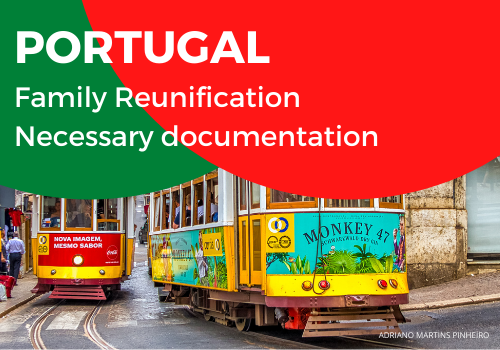
  • Portugal | Family Reunification – Necessary documentation

    Portugal | Family Reunification – Necessary documentation

    Applying for residence in Portugal
    For living in Portugal and family reunification

    Documents required

    Application for residence card is scheduled and submitted by the holder of the right to family reunification.

    Necessary documentation as follows:

    • Two recent, identical photographs, in colour with blank background, and easily identifiable (only for appointments at Odivelas, Aveiro or Braga SEF bureau);
    • Documentary proof certifying the entitlement to Family Reunification by a foreign citizen holder of a Residence Permit, an EU Blue Card, or the long-term resident status;
    • Authenticated supporting documents proving the family links invoked;
    • Authenticated copies of the identification documents of the applicants family members;
    • Evidence that the applicant has adequate accommodation (not applicable to refugees);
    • Documentary evidence of adequate subsistence means for the applicant and for the family, as per the provisions of Order number 1563/2007, of 11/12 (not applicable to refugees);
    • Extract from the judicial record in the country of origin or of provenance of the family member (where the family member has been residing for a period exceeding one year) except for under 16 years old.

    SPECIFIC DOCUMENTS

    • Certificate of incapacity of children of age, in case of dependent children of age;
    • Certified copy of adoption decision, as well as a certified copy of the acknowledgement of the decision by the national authority, where applicable;
    • Full Birth Certificate, documentary evidence of economic dependence and document supporting the enrolment in a Portuguese teaching establishment, in case of children who are of age, single and dependent;
    • Documentary evidence of economic dependence by first-degree relative in the direct ascending line, under the age of 65;
    • Certified copy of the custody decision, as well as a certified copy of the acknowledgement of the decision by the national authority, where applicable, for cases involving minor siblings
    • Written authorization by a non-resident parent, certified by a Portuguese consular authority, or copy of court decision giving legal guardianship of a minor child, or the custody of an incapacitated person to the resident or to the respective spouse, where applicable;
    • Circumstantial evidence of Unmarried Partnership, as provided for in Article 2-A of Act number 7/2001, of 11 May, as amended by Act number 23/2010, of 30 August, together, where possible, by other circumstantial evidence of the unmarried partnership relevant to the purposes of Article 104, paragraph 2 of the Aliens Act.

    NOTES

    The granting of a residence permit shall entail: the absence of any fact which, if known to the competent authorities, would preclude the granting of the visa; Absence of conviction for a crime which in Portugal is punishable by a custodial sentence of more than one year; The applicant is not within a period of prohibition of entry into the national territory, following an expulsion measure from the country; No indication in the Schengen Information System; No indication in SEF’s Integrated Information System for non-admission purposes, under article 33 of the Aliens Act;
    After decision of the application for family reunification, SEF shall inform the Ministry of Foreign Affairs for the beginning of the process of residence visa within its consulate.
    After entering into national territory with a residence permit, the family member of the applicant shall require within SEF the residence permit under article 107 of Law no. 23/2007 of 4 July, as amended.
    The family member holding a visa issued under article 64 of the Aliens Act, or who is in the national territory to which the application for family reunification has been accepted, is granted a residence permit of duration identical to the residents. The family member holding a permanent residence permit is issued a renewable residence permit for three years under the amendment introduced to article 75 of the Aliens Act, by article 192 of Act n.º 75-B/2020, of 31 december, valid (at first) for two years. Two years after the issue of the first residence permit and in as much as there are family ties or, regardless the mentioned deadline, whenever the holder of the right of family reunification has underage children living in Portugal, the members of the family have the right to an autonomous permit, valid for three years, and renewable, under the amendment introduced to article 75 of the Aliens Act, by article 192 of Act n.º 75-B/2020, of 31 december. The first residence permit granted to the spouse under the family reunification is autonomous whenever he/she is married for more than five years with the resident – valid for two years, renewable for three, under the amendment introduced to article 75 of the Aliens Act, by article 192 of Act n.º 75-B/2020, of 31 december.


    • The following family members, in accordance to Articles 99 and 100 of the Aliens Act are entitled to family reunification:
      • The spouse;
      • Underage or incapable children under guardianship of the couple or of one spouse;
      • Minors adopted by an unmarried applicant, by a married applicant or by the spouse, following decision taken by the relevant authority of the Country of origin, provided that legal framework incorporates the same rights and duties of natural affiliation and provided that decision is acknowledged by Portugal.
      • Children who are of age, and of whom the couple or one of the spouses is in charge, and study in a Portuguese teaching institution.
      • Children who are of age, and of whom the couple or one of the spouses is in charge with, single or studying, whenever the holder of the right of reunification has a residence permit granted under article 90 – A.
      • First-degree ascendants in the direct line to the resident or the respective spouse provided they are dependent on either of them
      • Underage siblings under custody of the resident, following decision by a relevant authority in the country of origin, as long as that decision is acknowledged by Portugal
    • The following family members of unaccompanied minors are also entitled to family reunification:
      • First-degree ascendants in the direct line;
      • His / her legal guardian or another family member, if the refugee has no direct ascendants or if it proves impossible to trace them.
    • For purposes of family reunification with a beneficiary of a Residence Permit for study, unremunerated professional training or voluntary work are entitled the following family members:
      • The spouse
      • Underage or incapable children under guardianship of the couple or of one spouse;
      • Minors adopted by an unmarried applicant, by a married applicant or by the spouse, following decision taken by the relevant authority of the Country of origin, provided that legal framework incorporates the same rights and duties of natural affiliation and provided that decision is acknowledged by Portugal.
    • Civil partnership – Family reunification may be authorized with:
      • A non-marital legally recognized partner of the resident, irrespectively of whether the partner is inside or outside national territory;
      • Underage or incapable children, including children adopted by the legal partner, provided these children are under their guardianship.
    • Documents written in a foreign language must be accompanied by the respective translation that can be certified by any of the entities listed in Notaries Code, namely: Portuguese Notary; Portuguese Consulate in the country where the document was passed; Consulate of that country in Portugal.

    SCHEDULING APPOINTMENT BY TELEPHONE
    PHONE: 217 115 000 | MOBILE: 965 903 700

    LAW | ARTICLE 98, PARAGRAPH 1 – FAMILY REUNIFICATION

    Website SEF

    https://advocaciapinheiro.com/

    SEF

  • Church in Portugal | How to register and start

    Church in Portugal | How to register and start

    Evangelical Church | Portugal | Registration | Documents | Tax exemption

    This article will cover:

    • constitution / registration of churches / regularization;
    • documentation for registration;
    • tax benefits / tax exemption;
    • refusal of registration;
    • other procedures, rights and documents.

    Contact us

    The Religious Freedom Law in Portugal (Law nº. 16/2001, of 22 June) encompasses several rights for churches and religious communities, such as the guarantee of assembly, registration, tax benefits and freedom to adore, worship, evangelize, etc.

    The legislation contains separate chapters for both individual rights to religious freedom and collective rights to religious freedom.

    Thus, both the person of the member, individually, and the religious institution, collectively, will have their rights assured, with regard to religious freedom. In addition, the leaders of institutions, called ministers, have specific rights, as will be seen below.

    If the entity intends to register with the Register of Religious Collective Persons, for the attribution of legal personality as a religious collective person, the request for registration must be formalized in writing, using the appropriate form Mod. 5 of the RNPC, within the validity period of the admissibility certificate which approved the aforementioned name, except if it is an entity already definitively registered with the FCPC and instructed with the following documents:

    • Certified photocopy of the notarial deed or certified copy of the entity’s statutes, accompanied by the minutes of the general meeting, with the deliberation of approval of the statutes and list of present members (who must be an integral part of the same). The statutes must be signed and initialed by the representatives of the church or religious community, duly identified, affixing with the respective signature, the indication of the number, date and issuing entity of the respective identification document;
    • Publication of the statutes in the official newspaper (Diário da República) if the notarial deed has been signed before October 31, 2007;
    • Documentary evidence attesting to the existence of the entity in Portugal, its organized social presence, religious practice and duration in Portugal (paragraph b) of art. 35 of Law No. 16/2001, of June 22);
    • Authenticated copy of the minutes of the general meeting, with the appointment and identification of the heads of bodies in effective functions and their representatives and specification of the competence of the latter (cf. paragraph i) of art. 34°), and the respective minutes book must be properly numbered and initialed;
      Document containing the identification, residence and NIF of the members of the Board and their representatives;
    • Documentary proof of the general principles of the doctrine – declaration of faith;
    • Brief description of religious practice and acts of worship;
      Declaration of the existence or not of its goods or services that are or should be part of the heritage of a religious legal person (paragraph e) of art. 34 of Law No. 16/2001, of June 22);
    • The registration fee is €60.

    Simultaneously with the confirmation of the registration request, registration in the Central Register of Legal Entities takes place, as provided for in art. 6 and nº 1 of art. 11 of the Regime for the National Register of Legal Entities, whereby the emolument amount of 20 is added to the fees indicated. €, however, it is not necessary to fill in the Form 2 form.

    Adriano Martins Pinheiro, lawyer in Portugal and Brazil | +351 91 543 1234 | pinheiro@advocaciapinheiro.com


    https://advocaciapinheiro.com/

    IRN


  • D7 Visa Portugal: How to apply for a Portugal D7? Retirement | Income

    D7 Visa Portugal: How to apply for a Portugal D7? Retirement | Income

    This article is to answer the questions we received:

    • How to apply for a Portugal D7 Visa?
    • What is a D7 Visa?
    • How much do you need?
    • What are the documents required?

    The D7 visa is one of the best visa options and is ideal for retirees and entrepreneurs.

    The D7 visa is one of the best because you just need to prove that you have sufficient funds to support yourself during your stay in Portugal.

    Basically, your income must correspond to twelve minimum wages in Portugal. By the way, to start the D7 visa process, it is necessary to have this amount (12 x minimum wage) in a bank account in Portugal.

    For example, the minimum wage in Portugal this year (2021) is 665 euros. Therefore, you must have a personal income greater than or equal 12 x 665 euros, that is greater than or equal 7980 euros. But, you must remember that the minimum wage changes annually.

    If there are family members, there must be additions in the calculation.

    For example, a couple with children must add 50% for the other spouse, plus 30% for each child.

    We are a licensed Law Firm in Portugal. We have our office located in Porto, but we only receive clients by appointment (pinheiro@advocaciapinheiro.com or Whatsapp / Telegram / SMS).

    Documentation

    As we speak, you must have sufficient funds to support yourself during your stay in Portugal. In other words, you must prove that you can meet all the requirements.

    The most important documents are:

    – Proof of regular income or passive income;
    – Proof of a place to live.

    Anyway, all documents that can prove your income will be necessary or useful, such as bank statements, retirement records, properties, etc.

    In addition to these documents, you will need to present all the usual documents for all visas, such as criminal background check, valid travel insurance, passport etc.

    The first contact must be made by message (whatsapp, Telegram, SMS or email). We do not answer phone calls without scheduling.
     You need to send a message and request an online consultation.
     When we understand what you want to contract, we will send you a fee proposal by email. 

    You apply for a visa at the embassy (consulate) in your home country.

    For example, if you are in the United States, you must go to the embassy (consulate of Portugal) in the United States and start the visa process at the Consulate. The visa process cannot be started in Portugal.

    After entering Portugal, you must schedule a visit to the Foreigners and Borders Service – SEF, in Portuguese: Serviço de Estrangeiro e Fronteiras – SEF.

    You will have four months to attend the SEF interview. Upon approval of the process, you will receive your residence permit.

    Permanent Residence Permit and Citizenship

    After five years of residence in Portugal, you will be able to apply for your permanent residence permit. In addition, with five years of residency, you will also be able to apply for Portuguese citizenship.

    Adriano Martins Pinheiro is a lawyer in Portugal

    Contacte-me by Whatsapp (click here)

    SEF

  • Driving license | Medical certificate

    Driving license | Medical certificate

    Driving license | Medical certificate

    Electronic system makes clinical auditing easier.

    Three months after the mandatory electronic issuance and transmission of medical certificates for driving licenses, more than 120 thousand citizens have already benefited from this new service.

    The electronic system makes clinical auditing easier, making it possible to identify, through the database, risk situations and monitor the issuance of certificates.

    The measure was implemented to allow automatic recording of inadequacies, restrictions and adaptations, thus making it easier to identify suspected fraud, cases that are analyzed by the Group for the Prevention and Fight against Fraud in the National Health Service.

    Dematerialization is mandatory since May 15, 2017, the pilot phase started on March 1 in primary health care and, later, on March 14, in hospital care.

    SPMS – Shared Services of the Ministry of Health, together with the General Directorate of Health (DGS), is responsible for dematerializing the medical certificate for the driving license, which allows the citizen to go to the doctor and request a certificate, without having to go to the services of the Institute of Mobility and Transport, since the certificate is sent electronically to that body.

    IMT | Portugal

    Home